Process

Designing with dev in mind: how we avoid handoff headaches

Our systems-based workflow delivers polished, high-performance websites without delays or bloat.

Jacob Kotler

Lead designer

Cover image for blog post

The handoff.
The moment where beautiful Figma files meet real-world code—and things start to break.

What looked perfect in the design review ends up misaligned in the browser. Typography shifts. Button states go missing. Devs are stuck guessing what’s intended, and designers are frustrated by compromises.

At Ageva, we’ve been on both sides of this. And we know: a clean handoff isn’t a matter of better tools—it’s a matter of better collaboration.

Here’s how we build projects where design and dev work like two halves of the same brain—not two departments tossing files back and forth.

1. Developers are in the room from day one

We don’t design in isolation and “loop in dev later.” That’s how you end up with layouts that look great on a grid but collapse in code.

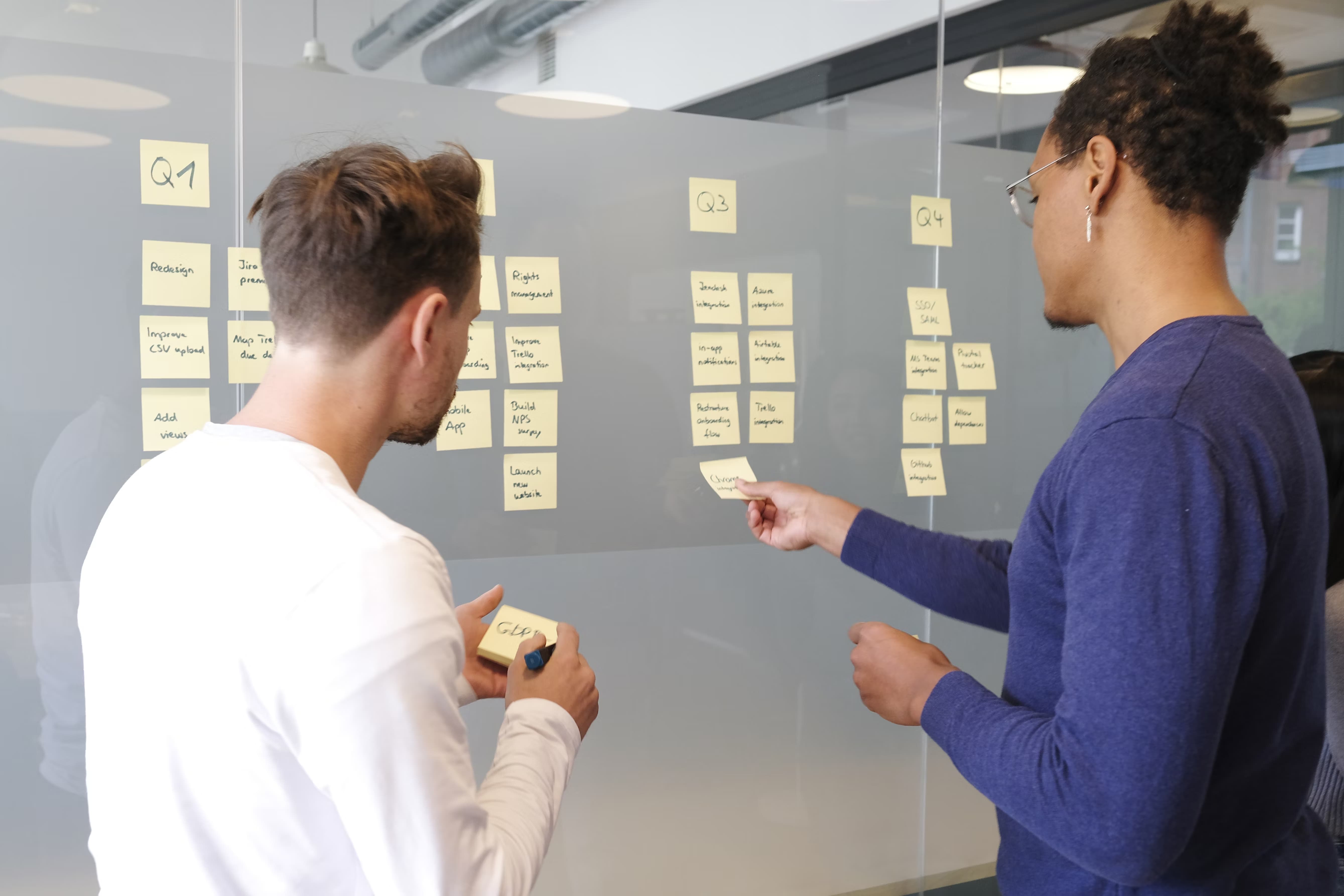
Instead, our developers join early workshops, review wireframes, and flag friction points before they become roadblocks.

It’s not just about feasibility—it’s about alignment. When devs understand the design intent from the start, they’re not just implementing—they’re contributing.

2. Our designs are component-driven

We don’t deliver static artboards. We deliver systems.

That means:

  • Reusable UI components with real states (default, hover, error, etc.)

  • Clear naming conventions that mirror the final codebase

  • Thoughtful spacing, sizing, and logic that aligns with responsive breakpoints

This gives devs a visual spec and a mental model to build from. No guesswork. No pixel-pushing marathons.

3. We use structure—not style—to communicate logic

You’ve probably seen it before: 20 versions of the same card, all slightly different. Designers tweak margins. Developers groan. QA goes wild.

We avoid this by designing with structure first. We define rules for:

  • Grid behavior

  • Content limits

  • Heading hierarchies

  • Component variations

That means every card, button, section, or modal has a consistent logic. Easier to build. Easier to scale. Easier to maintain.

4. We speak dev’s language

Figma is great, but it only goes so far. That’s why we layer our handoff with:

  • Code-ready specs

  • Token-based design systems (color, spacing, typography)

  • Notes on behavior (not just appearance)

  • Dev walkthrough calls, if needed

We also define edge cases. What happens when text overflows? What’s the empty state? How should a carousel behave on touch?

Good handoff isn’t just about what you show—it's about what you explain.

5. We design for the stack, not just the screen

Every dev team is different. Some build in React. Others use Webflow or custom stacks. Some need CMS-ready modules. Others want hard-coded templates.

We tailor our design process to match the tech stack before we begin.

That means:

  • Knowing what’s dynamic and what’s static

  • Structuring sections based on CMS fields

  • Making dev-ready animations and transitions that don’t break performance

  • Designing with actual content limits, not lorem ipsum placeholders

The result? Fewer surprises. Smoother builds. Happier devs.

It’s not just handoff—it’s a relationship

At Ageva, we don’t treat development like the final step. We treat it as part of the creative process.

Because the truth is: no matter how beautiful your design is, if it can’t be built the way it was intended, it doesn’t matter.

When design and dev work together from the start, the result isn’t just a better build—it’s a better experience. For your team. For your users. For the long run.

Final thought

A clean handoff doesn’t start at the end. It starts before the first screen is even designed.

At Ageva, we’ve built a process where design and dev aren’t at odds—they’re in sync. That’s how we avoid last-minute chaos and deliver sites that feel as good to build as they do to use.

If you’re tired of messy launches or dev teams dreading the handoff, let’s fix that—for good.

FAQ’s

Frequently asked questions

Frequently asked questions

Not sure about something? Check our FAQ for quick answers and helpful details.

Not sure about something? Check our FAQ for quick answers and helpful details.

How long does it take to launch an MVP with Peak Studio?

14 days, brief to launch. Every Sprint includes design, development, automation, and pre-launch A/B testing — so by the time your product goes live, it's already been validated, not just built. Most agencies quote 2–3 months for the same scope. We compress that into two weeks because we cut the parts that don't move your launch forward: long discovery decks, multiple rounds of internal sign-off, and sequential (rather than parallel) workstreams.

What's included in a Peak Studio Sprint?

A fixed 14-day engagement covering GTM strategy, design, development, and pre-launch creative testing — for $5,000. You get one revision round and direct access to your sprint lead throughout. Nothing is hourly or open-ended; the scope and price are fixed before we start, so there's no surprise invoice at the end.

How is Peak Studio different from a traditional design or development agency?

Two things: speed and validation. We deliver in 14 days, not 14 weeks. And unlike most agencies, we test your creative and copy with real audience data before it goes live — using pre-launch A/B testing — so you're not guessing whether your launch will work. You're shipping the version that's already shown signal.

Do you work with startups outside India?

Yes. Peak Studio serves founders and businesses across India, the Middle East, and Southeast Asia. Pricing is localized accordingly — Sprints start at $5,000, with India-based engagements also available in INR.

What happens after the first Sprint? Can I continue working with Peak Studio?

Most clients move into our Growth plan — $8,500/month for two sprint cycles, a 15% saving versus booking Sprints individually. It's built for teams past MVP stage who need continuous design, automation, and creative testing without re-negotiating scope every month. For larger or more complex needs, our Partner tier offers a fully embedded team with custom scope and pricing.

What do I need to provide before a Sprint starts?

Four things, ready on Day 1: a clear brief, your brand assets, a decision-maker available for daily input, and confirmed budget. This is non-negotiable — it's the reason we can guarantee 14 days. Clients who show up prepared are the reason this model works; clients without these four ready typically need a short pre-sprint alignment call first.

Is the 14-day timeline realistic, or is it marketing?

It's the actual delivery model, not a promotional claim — which is why it's tied to a fixed scope and a fixed price. The trade-off for speed is preparation: we ask for a complete brief and available decision-maker upfront precisely so nothing slows down the build once we start. Agencies that promise fast timelines without this requirement are usually the ones that miss them.

How long does it take to launch an MVP with Peak Studio?

14 days, brief to launch. Every Sprint includes design, development, automation, and pre-launch A/B testing — so by the time your product goes live, it's already been validated, not just built. Most agencies quote 2–3 months for the same scope. We compress that into two weeks because we cut the parts that don't move your launch forward: long discovery decks, multiple rounds of internal sign-off, and sequential (rather than parallel) workstreams.

What's included in a Peak Studio Sprint?

A fixed 14-day engagement covering GTM strategy, design, development, and pre-launch creative testing — for $5,000. You get one revision round and direct access to your sprint lead throughout. Nothing is hourly or open-ended; the scope and price are fixed before we start, so there's no surprise invoice at the end.

How is Peak Studio different from a traditional design or development agency?

Two things: speed and validation. We deliver in 14 days, not 14 weeks. And unlike most agencies, we test your creative and copy with real audience data before it goes live — using pre-launch A/B testing — so you're not guessing whether your launch will work. You're shipping the version that's already shown signal.

Do you work with startups outside India?

Yes. Peak Studio serves founders and businesses across India, the Middle East, and Southeast Asia. Pricing is localized accordingly — Sprints start at $5,000, with India-based engagements also available in INR.

What happens after the first Sprint? Can I continue working with Peak Studio?

Most clients move into our Growth plan — $8,500/month for two sprint cycles, a 15% saving versus booking Sprints individually. It's built for teams past MVP stage who need continuous design, automation, and creative testing without re-negotiating scope every month. For larger or more complex needs, our Partner tier offers a fully embedded team with custom scope and pricing.

What do I need to provide before a Sprint starts?

Four things, ready on Day 1: a clear brief, your brand assets, a decision-maker available for daily input, and confirmed budget. This is non-negotiable — it's the reason we can guarantee 14 days. Clients who show up prepared are the reason this model works; clients without these four ready typically need a short pre-sprint alignment call first.

Is the 14-day timeline realistic, or is it marketing?

It's the actual delivery model, not a promotional claim — which is why it's tied to a fixed scope and a fixed price. The trade-off for speed is preparation: we ask for a complete brief and available decision-maker upfront precisely so nothing slows down the build once we start. Agencies that promise fast timelines without this requirement are usually the ones that miss them.